Showing posts with label News. Show all posts

Saturday, October 8, 2016

10 Shocking Things You Didn't Know About Hillary Clinton!

So the 2016 presidential elections have been full of controversy, but although you might think I'm talking exclusively about Trump, I'm actually speaking just as much about Hillary. Yes, Hillary Clinton has been plagued by controversy, and not just during this election but for decades prior. She's been involved in some extremely shady and downright illegal things that many of you may not have even known have happened.

Hillary Clinton (wikipedia)
So today, we're going to make a plunge and find out exactly what those things are. So without further ado, here are 10 shocking things you didn't know about Hillary Clinton.

Number 1: she may be very ill.

There's been a lot of controversy in the media and across the internet about exactly what the real state of Hillary's health is. There's multiple videos on YouTube on her trying to give a speech at various rallies where she is simply unable to speak because she swings into these violent coughing fits. Most recently, a cell phone video of her surfaced, where she was clearly unable to stand, stumbling into her private vehicle where her security literally had to hold her up. Now, the official answer to all of these events, according to her physician, is that the 68-year-old simply had pneumonia, but given her poor medical history, that may not be true. Hillary has had concussions and multiple blood clots in her leg among other things that may be all contributing to overall declining health. This has led many people to believe that she's hiding something way worse than pneumonia simply for the fact that she doesn't want it to affect the voting results.

Number 2: she almost didn't marry Bill.

Okay, obviously Bill and Hillary have had all kinds of issues in their marriage, but the most interesting is that they almost didn't get married at all. It took more than three proposals for Hillary to say yes to Bill. He first proposed to her at a trip to London, England, but she declined, and even trying multiple times after that, he still got the same answer. It wasn't until he actually went out and bought a house for Hillary that she had previously said that she liked and told her you'd better come marry me, 'cause I can't live in it by myself, that she finally said yes. And of course they lived happily, mostly, every after.

Number 3: she can drink a lot.

Back in 2004, Senator Hillary Clinton and Senator John McCain were on a congressional tour of Estonia. The pair found themselves at a tavern in the capital city of Tallinn. According to the people present, the two declared a head-to-head vodka drinking contest because, you know, that's what you do when you're in a foreign country and you're a politician. Clinton apparently out drank McCain shot after shot, which is impressive, not because she's a woman, but because she's a politician, and I genuinely had no idea they had any idea how to have fun.

Number 4: she was rejected by the Marines.

In 1973, when she was just 26 years old, Hillary made an attempt to join the Marine Corps, however, she was rejected. According to her story, they rejected her simply because she was too old, at the yes, ripe age of 26, but the story has been met with a lot of criticism. She claims that her age, her poor eyesight and the mere fact that she was a woman were the contributing factors to her rejection. But since then, many Marines have come forward claiming that during the time that she tried to join, the Armed Forces were so desperate for lawyers that those details simply would not have mattered, and that she essentially made the entire story up.

Number 5: she hasn't driven a car since 1996.

Okay, it's important to note that many politicians get aids and Secret Service agents to drive them around for security reasons. However, many politicians still retain and update their drivers licenses so that they can drive their own vehicles. Well, Hillary's an exception to that however, apparently, because she has not driven a motor vehicle in two full decades, all the way back to 1996. She once joked that she remembers the last time that she was behind the wheel, and so does the Secret Service, which is apparently why she hasn't driven since.

Clinton's family (wikipedia)

Number 6: she has had many firsts in her title.

Hillary held the title of first lady for eight years, but something many of you may not know is that is not the only first in her name. Due to her involvement in the Whitewater controversy, which was a shady real estate investment scandal, she actually became the first and only first lady to ever be subpoenaed. On top of that, she and her husband were the first first couple to be ever fingerprinted by the FBI. Okay, take my fingerprints but be gentle, or don't, mmm. On a more positive note, she was the first lady ever to earn a post-graduate degree, be elected to public office or, of course, run for the presidency herself.

Number 7: she won a Grammy Award.

Hillary Clinton has achieved many things. She's a lawyer, a politician and a Grammy Award winning artist. In 1997, at the 39th Grammy Awards, she actually won a Grammy Award for the Best Spoken Word Album of the Year. The album that she won for was the audio book version of It Takes a Village, a book that she published just the previous year. Not only that, but her husband Bill, possibly inspired by her, went on to win two Grammy Awards himself for also Spoken Word Albums.

Number 8: she has been linked to multiple deaths.

Okay, this is a serious one. An unsettling number of bodies have allegedly accumulated in the presidential nominee's wake over the years. Now there are too many to list individually, but there are some more notable ones that I want to tell you about. Just a few months ago, John Ashe, former United Nations General Assembly president, died from a bizarre gym incident right before he could bring the Clintons up on charges related to illegal donations for their election fund. They found him with a crushed throat because he apparently dropped a dumbbell on himself. But one of the most notable was that of James McDougal, who was a financial partner of the Clintons in a real estate deal alongside his wife, Susan. On March 8, 1998, McDougal had a heart attack while in solitary confinement, before he could provide witness testimony to a case that the Clintons were involved in, but if you think that's bad, a total of 46 people who were close to Hillary over the years have died from either bizarre or unexplained deaths.

Number 9: she conversed with a ghost.

So most presidents have admitted to talking to God as Christianity is a popular tool amongst those running to get elected, but Hillary took it a step farther by saying that she claims to have spoken with a ghost. She has said that she's had frequent conversations with Eleanor Roosevelt while she was living in the White House. Eleanor Roosevelt was the first lady herself from 1933 to 1945 and died in 1962. Apparently, she would come back on occasion just to remind Hillary that she needed to buck up or grow a skin as thick as a rhinoceros. Hillary claims that she was told to communicate with Eleanor by her spiritual advisor. Oh, and it also turns out that Roosevelt wasn't the only famous spirit up for a chat, because Hillary also claims that she has spoken with Gandhi.

Number 10: the email controversy.

Okay, many of you probably already know about this, but for those of you that don't, allow me to explain. In early 2015, it was revealed that Hillary, during her time as secretary of state, exclusively used her family's private email server to send emails. Now you might be wondering Matt, why is that a big deal? It's just emails. Well, it's a big deal because some of those emails contained highly classified material. As with every other politician, she was supposed to use official State Department email accounts maintained on federal servers for security purposes. This was such a big deal that the FBI actually launched an investigation into this scandal, revealing that 113 emails contained information that was considered classified at the time that it was sent, but it gets worse. Out of those emails, 65 were deemed secret, and 22 were deemed top secret. Now this outraged politicians and the public alike, as many believed that she was putting America's national security at risk, which she was. But it gets even worse because she deleted over 31,000 emails in what appeared to be an attempt to cover up an unauthorized use of a home server for official email use. Now she has since admitted to this, saying that the reason that she had all of her emails on one phone is because it was just more convenient, and it was simply inconvenient to carry two separate phones. Yeah, yeah, Hillary, that's a good excuse, you know, sending nuke launch codes and stuff like that just because it's inconvenient to carry two phones. Yeah, that's good.

So those were 10 shocking things you didn't know about Hillary Clinton, but I wanna know from you guys. Is there anything I missed? Is there some scandal out there that she did that I may have missed on this list, and I also want to know in the comments which one on this list was the most shocking to you. Was it the mail thing or was it something as simple as the fact that she denied her husband Bill multiple times before they got married. I wanna know from you in the comments, and that's it.

I will see you guys next time with a brand new article. Thanks for reading, bye.
Read more

Tuesday, August 23, 2016

Does Socialism Work In France?

France Eiffel via telegraph
France is not often thought of as a model for socialism, in fact, many might not even know that they’re a social democracy. With right wing groups on the rise, sky-high unemployment, and the president’s approval ratings in the gutter, many are saying that France’s long-running experiment with socialism is failing. However, others say this political ideology is a key part of both French culture, and everyday life.

So we wanted to know, what is socialism like in France? Well, historically, the birth of socialism itself can be traced back to post-French Revolution political theorists like François- Noël Babeuf. They promoted economic equality and the right for workers to share in the profits of their production. But France’s current Socialist policies were mostly introduced by their longest sitting president, Francois Mitterrand. He was in office from 1981 to 1995. His economic program worked to nationalize key industries, increase the minimum wage by 10 percent, introduce a 39-hour-work-week, a mandatory tax on the wealthy, and greater worker’s rights. Mitterrand is credited with popularizing socialism and the Socialist Party in France.

In 2000, the “work week” was revised again, this time down to 35-hours, after which it would be considered overtime pay. Additionally, on average, French workers see one MONTH of paid vacation every year, and among OECD countries France provides the most vacation time. By comparison, the United States is the only advanced country in the world without legally 'guaranteed paid vacation. Short work weeks and long vacations, plus pro-union laws and bargaining power make up the backdrop of France’s workers’ rights.

Like many socialized countries, France has also implemented universal health care. In 2000, the World Health Organization ranked French healthcare as the best overall in the world. But it doesn’t come cheap. In 2014, the country spent 11.5% of their GDP on health care costs, which is more than five times what they spend on defense. Health care costs the French government roughly $4,300 per person and covers more than three-quarters of all expenditures, which is high by European standards. Still, it is less than half of what the US, which doesn’t provide universal coverage, spends per person on health care. But nonetheless, France has been struggling. The unemployment rate is over ten percent, and youth unemployment has been higher than 25%.

Additionally, France’s left-leaning immigration laws have led to the third highest proportion of immigrants in the EU, as of 2013. The recent influx of migrants into Europe has seen protests and riots by the French, and waves of anti-left and anti-immigration sentiments. In fact, despite the early popularity of French socialism, the Socialist Party and other leftist groups have lost significant support in polling. The most recent elections saw the rapid rise of the right-wing extremist group, National Front. Socialist President Francois Holland has the LOWEST approval rating in French history, roughly 14%, and has many questioning not only his policies but the ideology behind them. If this trend of right wing growth continues, it's possible that France will change dramatically over the coming years.

Thanks for reading this article, don’t forget to comment and subscribe for new articles every day. Bye!
Read more

Monday, August 22, 2016

What Is Sharia Law?

Sharia Law (source)
Sharia Law - we've been catching wind of this everywhere recently. It's a tentpole of the Taliban, and it's what ISIS needs for Iraq and Syria. It's likewise utilized as a part of the lawful frameworks of the United Arab Emirates. In any case, clearly, those are altogether different gatherings and circumstances.

So, what is Sharia law? Well, there’s no set list of things that are, or aren’t Sharia Law. In Arabic, Sharia is roughly translated to “path to the watering hole” and it refers to a system meant to control all aspects of its followers’ lives. That incorporates everyday schedules, familial and religious commitments, and budgetary dealings. It prescribes punishments, but those punishments don’t necessarily have to be draconian or harsh. 

If the particular sect of Islam that wrote those Sharia laws is more focused on charity and loose interpretations of the Quran, then they wouldn’t include things like stoning or amputation. In the vast majority of Muslim communities, an “eye for an eye” is seen as an analogy - not as a literal instruction. But extremist groups, like ISIS and the Taliban, have a more literal interpretation of the Quran and other teachings, so their version of Sharia Law includes things like stoning and the oppression of women... and “an eye for an eye.” 

Like with all laws, it comes down to who is making the law and how they’re enforcing it. When we talk about militant Jihadists, it’s important to include their desire for Sharia Law in the conversation - because the goal of establishing Sharia law reveals a lot about these groups. The teachings that these extremists use are from the 7th and 8th centuries - a time when institutionalized slavery, honor killings and the general oppression of women were the norm. 

So if a group is taking these teachings literally, then we can expect to see a lot of human rights violations. Plus, we know the group wants a legal system with absolutely no separation of Church and state. Not only does that give an undue amount of power to the people in charge, but it also creates natural incentives by which they can restrict freedom of religion, freedom of speech and freedom of assembly. 

Thanks for reading the article, don’t forget to comment and subscribe for new articles every day.

Read more

Sunday, August 21, 2016

Which Countries Have The Fastest Growing Population?

Over population (wikipedia)
Experts say the global population will reach 10 billion by 2060. But population growth in countries like China and the US has remained steady and or even decreased over the last few decades. So, which countries actually have the fastest growing populations?

Well, impoverished countries tend to populate faster than their developed counterparts. In fact, most of the fastest-growing countries are in Africa, which has an overall population that is expected to double over the next 40 years. This is particularly true in South Sudan, which became an autonomous state in 2005 and an independent nation in 2011. The country's population has grown by roughly four percent every year, compared to a global growth rate of just over 1% a year. One expert says that this partially reflects South Sudan’s effort to rebuild their populace after more than 50 years of conflict with the North. But others place the emphasis on the country’s shockingly high fertility rate of more than five births-per-woman, compared to the global average of almost two-and-a-half. Sex Education is uncommon in South Sudan, and roughly two percent of women use modern methods of contraception, due to lack of access and cultural norms that discourage birth control.

One of the fastest growing populations outside of Africa is the small middle eastern country of Oman. The country’s population has nearly doubled in the last 25 years, and grown by nearly 10 percent every year since 2011. Interestingly, these numbers do not reflect high fertility rates. Women in Oman, on average, between two and three children each, compared to more than eight per woman in the 1980’s. Instead, Oman’s growth rate is largely a result of immigration. Out of a population of four million, nearly half are immigrants. Most come from India, Pakistan, and Bangladesh in the hope of finding a job in Oman’s rapidly growing economy. This is particularly prevalent in its capital, Muscat, where immigrants actually outnumber Omani nationals.

A similar phenomenon can be found in Lebanon, which, in 2014 showed a population growth rate of nearly ten percent. Considering the country’s extremely low fertility rate, Lebanon’s sudden growth can almost entirely be attributed to an influx of refugees from neighboring Syria, Palestine and Iraq. Refugees account for more than a quarter of Lebanon’s population, a larger proportion than any country in the world. This has placed a huge burden on Lebanon’s relatively weak economy and unstable infrastructure and has led the country to crack down on residency and border control.

For a lot of countries, moderate population growth reflects a healthy economy and functional society. But for other nations, particularly those which are less developed, a growing population brings an entirely new set of challenges. More people means a heightened demand for resources and infrastructure, as well as jobs and housing. As the global population continues to grow, these problems will only become larger in regions that are ill-equipped to handle them. On the other side of the spectrum are countries with rapidly dwindling populations, which comes with it’s own enormous set of problems and often complicated causes.

Thanks for reading this article, don’t forget to comment and subscribe for new articles every day! See you. Bye!
Read more

What Does Brexit Mean For Scotland?

Scotland (source)
When the United Kingdom voted to leave the European Union in June 2016, the decision was not unanimous. Although 52% of the country voted for the Brexit, the results were mostly localized, with one strong exception. According to Scotland's First Minister Nicola Sturgeon, every single local authority area in Scotland voted to stay, which is not entirely surprising.

Back in 2014, when Scotland held its own referendum on independence, it ultimately stayed with the UK under the assumption it would continue to benefit from the EU. Now that that’s no longer the case, what does the future look like for Scotland?

Well, within hours of the Brexit vote, Scottish leaders began calling for a new referendum to leave the UK, and re-join the EU as an independent nation. But just as was the case in 2014, the decision to break away is not that simple. For the past three centuries, Scotland and England have maintained one of the strongest economic, military, and diplomatic relationships in the world.

In 1707, the separated Parliaments of England and Scotland passed the “Acts of Union”, which followed the Treaty of Union in 1706. Their merger to create “Great Britain”, was largely fueled by the fact that the two states, plus Ireland, had already shared a single monarchy for more than 100 years. But that was centuries ago, and as shown by the Brexit referendum, England and Scotland don’t seem to see eye to eye anymore.

Scottish First Minister, Sturgeon, described the removal of Scotland from the EU against its will as "democratically unacceptable". Still, separating from the UK, if Scotland chooses to do so, would be a fairly lengthy process. First, they have to reestablish a referendum. Serious discussions on holding the original 2014 referendum began at least five years in advance, and while it may not take until 2021 for Scotland to vote on its independence, it will likely have to wait until the UK actually begins proceedings to leave in October. From there, it may take another two years to actually separate, based on prior estimates from 2014.

In that time, if the UK leaves the EU before Scotland leaves the UK, Scottish residents would likely lose the current lax immigration and travel policies they’ve previously enjoyed. Additionally, Scotland relies on the UK for defense purposes, and its defense industry employs tens of thousands of Scots. Not only would the newly independent country have to establish a new military, but it would also have a severe economic drawback. But it might not all be bad news.

Following the Brexit vote, the UK’s credit rating was downgraded from triple-A to double-A. If Scotland manages to rejoin the EU, it is possible they’d end up with a higher credit rating than the current UK. And perhaps more worryingly, even if Scotland does manage to break away, there is no guarantee that it’d be able to join the EU at all. The European Commission has made it clear that they will not even consider the question as long as Scotland constitutionally remains in the UK. And while First Minister Sturgeon has already met with European Parliament leaders in Brussels, the President of the European Council has refused to meet with Sturgeon, implying that it was too early for such meetings.

While Scottish voters did agree to stay back in 2014, many are saying that the UK of the future is not the one they agreed to be a part of. While chances there will be an independent Scotland are seemingly very high; how long that might take, and whether it will be able to join the EU on its own is still unknown. So who is behind Brexit anyway? Well, many blame the potential next Prime Minister of the UK, and Former London Mayor, Boris Johnson.

Thanks for reading this articles, don’t forget to comment and subscribe for new articles every day.
Read more

Saturday, August 20, 2016

Which Countries Sell Citizenship?

Dual citizenship (source)
Citizenship is one of only a handful few rights that apparently everybody gets only for being conceived. In spite of the fact that there are different streets to turning into a subject, similar to marriage or livelihood, those are frequently laborious and regularly unsuccessful.But in a handful of countries, getting citizenship is actually quite simple - it’s as easy as writing a check. So, we wanted to know, where can you buy citizenship?

Well, as of 2016, nine countries are effectively selling citizenship. Most are small islands in the Caribbean and the Mediterranean, and all are relatively cash-strapped. Allowing foreigners to buy citizenship has the obvious effect of raising the country’s GDP, but it can also culminate in long-term economic prosperity through investments in housing and infrastructure. Because of that, numerous nations have made it simple and even moderate for individuals to purchase their way in.

The least expensive choice is the Caribbean island of Dominica, where citizenship can be purchased for just 100 thousand dollars or a real estate investment of at least 200 thousand dollars. This program has existed for more than 20 years, however it became particularly important to Dominica in 2015 after a tropical storm wiped out roughly 90 percent of the country’s GDP.

Today, citizenship sales are one of the country’s primary sources of revenue. However the program is said to be mismanaged, and public officials have been accused of pocketing much of the profits. A similar program exists nearby in St. Kitts and Nevis— two tiny Caribbean islands that form one nation. Like Dominica, St. Kitts’ relied on citizenship sales after a series of hurricanes decimated their economy in the late 1990’s.

Today, citizenship can be procured for a $250,000 flat rate or a $400,000 real estate investment. The deal also includes visa-free travel to the roughly 130 countries that accept a St. Kitts passport. At one point, St. Kitts was selling an estimated two thousand passports a year, and as a result, the country was seeing rapid development.

However, sales had plummeted since 2014, when Canada and the US issued warnings about the program. For example, businesspeople have reportedly used visa-free travel through those passports to avoid international sanctions or flee a country where they were wanted for a crime. This concept is not unique to far-flung island nations. In fact, a dozen other nations, including the US, offer permanent residency, or “golden visas”, to foreigners who invest in property, businesses or public assets. However, the price tag is usually much higher. The United Kingdom, for example, requires minimum investment of nearly $3 million dollars.

Golden Visa programs are extremely popular among wealthy Chinese nationals seeking to invest in the offshore real estate. So, what makes double citizenship so appealing? All things considered, for individuals from nations that face travel confinements, an alternative passport opens up an entirely new world of visa-free travel. For wealthy Americans, citizenship in St. Kitts or Dominica can mean immense investment funds, as neither one of the country's charges remote wage or capital increases.

So in spite of the high cost of citizenship, it might be all the more monetarily gainful that it appears.But having citizenship is not infallible, nearly every country has strict rules about when they can strip you of your citizenship.

Thanks for coming by, don’t forget to comment and subscribe for new articles every day!
Read more

Friday, August 19, 2016

Is It True That Puerto Rico Is A Failed State?

In July 2016, Puerto Rico defaulted on its debt for the third time. This follows a multi-year debt crisis in the unincorporated territory, stemming from expired tax incentives for US companies, an economic depression, and government inefficiency. Although some are optimistic about Puerto Rico’s future, others have already referred to it as a “failed state”.

So, is Puerto Rico a failed state? Well, the term itself is widely debated, but according to the non-profit Fund for Peace, there are four main characteristics of a “fragile” or “failed state”. One characteristic is that a fragile state loses the legitimate authority to make collective decisions. This is a bit of an interesting question for Puerto Rico, which relies heavily on the United States. Their economic boom was predicated on giving tax incentives to US businesses, and there was even a law from 1917, requiring all imports to be done on American ships with American crews. In fact, the current debt crisis has only been managed through the direct authority of the United States, after President Obama signed 2016’s PROMESA law, establishing the federal board to restructure Puerto Rico’s debt.

Puerto Rico via thenation.com
Another hallmark of fragile states is “an inability to provide public services”. The monopolized energy service, Puerto Rico Electric Power Authority, is pushing to raise electricity prices by 26% in early 2017, and all residents, even those with little to no income, will be forced to pay. But despite the rapidly rising costs, and the fact that more than a third of those who live in housing projects have reported an income of “zero,” Puerto Rico itself has been able to provide utilities to those who are able to pay for them.

A fragile state also often loses control of its territory and/or police force. Puerto Rico’s police force has been plagued by corruption and human rights abuses for decades. According to a report by the Department of Justice, from 2005 to 2010 roughly 10% of the police force was arrested for murder, assault, drug trafficking and other crimes. The ACLU put out a similar report, calling Puerto Rico: the Island of Impunity.

Finally, fragile states are unable to interact with other states as full members of the international community. Simply put, Puerto Rico is not a full member of the international community, as a dependent and unincorporated territory of the US. The downgrade of its credit rating to a D for “default”, as well as an influx of the Zika virus around Summer 2016, has made it risky to invest in, and even visit, and has made negotiations with other countries relatively fruitless. But while there are shades of a “fragile state” within Puerto Rico, it does not fulfill the basic characteristics.

Despite widespread poverty, mass emigration, and a slow breakdown in the day-to-day social order, as an unincorporated territory, it will be likely one day see a return to some form of normalcy with support from the United States. Puerto Rico is in a difficult position since it can’t declare bankruptcy because of its territorial status. So does the US have a responsibility to bail out its territories?

Thanks for coming by, make sure to give comment and subscribe for new articles every day. Bye!
Read more

Sunday, August 14, 2016

Where Is It Illegal To Be Gay?

LGBT (source)
In the aftermath of the June 2016 attack on an LGBT nightclub in Orlando, Florida, the UN Security Council issued a statement condemning the targeting of persons based on their sexual orientation. This was the first time the United Nations took an official stance on LGBT discrimination, and perhaps surprisingly, it garnered support from a number of countries that outlaw homosexuality, including Egypt and Russia.

So, where do these draconian laws exist? Where is it illegal to be gay? Well, according to the UN, homosexuality is a crime in at least 74 countries, 13 of which impose the death penalty for the alleged “crime.” These laws exist are most pervasive in Africa and the Middle East, where lengthy prison sentences, forced psychiatric treatment, whippings, hard labor and death by public stoning are all common punishments for homosexuality. Some of the most notable anti-gay laws exist in Uganda, where individuals can face life in prison for homosexual acts in public or in private.

These laws were first introduced by Uganda’s British colonial rulers in the 19th Century and retained through the country’s independence in 1962. But they largely went unenforced until the early 2000s, when American Christian Missionaries popularized the idea that gay people sought to destroy their society by preying on and recruiting children as homosexuals.

This has also been directly linked to Uganda’s infamous Anti-Homosexuality, or “kill the gays” bill, which, in 2014, which originally made homosexuality punishable by death. The bill was subsequently overturned, and no later versions have successfully made it through parliament. But an arguably worse place to be gay is Iran, which enforces capital punishment for homosexual intercourse. The law makes a distinction for gay women, who are lashed 50 times for their first three offenses, but for any further offenses the punishment is still death.

Gay men can also be whipped for lesser acts, like kissing or holding hands. Iran’s anti-gay laws stem from their adherence to Sharia Law, which is a strict interpretation of the teachings of Islam. The Quran explicitly states that sex between men should be punished. However it does not specify how, and later adds that those who repent should be left alone. Still, human rights groups estimate that between four thousand and six thousand people have been executed for such acts since Iran’s Islamic Revolution in 1979.

Afghanistan also adheres’s to Sharia Law, and, in effect, strictly forbids homosexuality. While the country was under Taliban rule from 1996 to 2001, gay men and women were routinely executed. However since the extremist group was toppled by US forces, Afghanistan has generally punished homosexual acts with a prison sentence. And although capital punishment is still enshrined in their legal code, it has reportedly gone unenforced since 2001. But these laws are not exclusive to Africa and the Middle East.

In 2013, Russia enacted the infamous anti-Gay Propaganda Law, which prohibits discussion or display of any non-traditional sexual behavior in a nonnegative light, in order to, according to the Russian government, protect minors. Belize has outlawed same-sex activity since 1988, and today, their Immigration Act bars gay men and women from even entering the country. The United Nations and various human rights organizations have made efforts to decriminalize homosexuality. However, the worst offenders have yet to reform their anti-gay laws.

Okay guys, that's all for today. Give your comment below and don't forget to subscribe to our newsletter. See you next time. Bye!
Read more

Saturday, August 13, 2016

What Is Life Really Like In Catalonia, Spain?

In June 2016, Spain held a much anticipated general election, following six months of political gridlock and no ruling party in parliament. Spain’s right-leaning parties secured the most votes, an outcome that many argued was the result of the left’s lack of unity on the question of a Catalonian referendum. Catalonia is an autonomous and culturally distinct region that has been vying for independence since the 19th century.
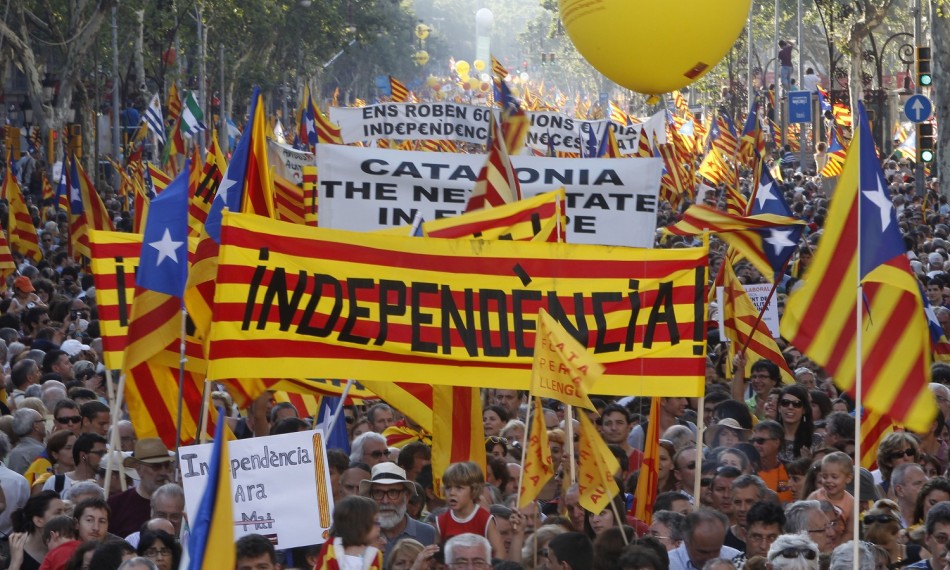
Catalan ask for independence (ibtimes.co.uk)

So what is life like in Catalonia and why does it want to split from Spain? Although Catalonia is technically a part of Spain, similar to the country’s 16 other autonomous communities, the region has its own unique culture, and even its own language: Catalan.

Roughly 7-and-a-half million people, or about 16 percent of Spain’s population, live in Catalonia. More than half of Catalans live in greater Barcelona, which is Catalonia’s largest city, as well as its political and economic hub. Compared to the rest of Spain, Barcelona is culturally and ethnically diverse. In fact, about a quarter of the city’s population are not Catalonian, and as a result, life in Barcelona can look quite different than life in the Catalonian countryside. For example, more than a third of Catalonians use Catalan as their primary language.

However in Barcelona, the same can be said for only about 2 percent of the population. But both Barcelona and rural Catalonia are popular among tourists, as the region offers lush, mountainous landscapes, beaches and castles. Catalonians are also known for their unique cuisine, with dishes featuring fish, olive oil, mushrooms and dried fruits. Interestingly, Catalonians are known to vacation within their own region, typically going to the same place every year.
Typical Catalonian food (tourisminbarcelona)

Given the popularity of Catalonia, it should come as no surprise that region is also Spain’s economic powerhouse, as its GDP of more than $200 billion dollars is higher than any other autonomous region. Many of Catalonia’s industries, like construction, services and food production, heavily rely on tourism. As a result, the region has not seen much of the economic hardship that has plagued Spain in recent years. In fact, as the country’s GDP plummeted and unemployment reached nearly 25 percent in 2015, Catalonia’s economy simultaneously grew, and unemployment dropped.

Catalonia’s thriving economy is at the center of its efforts to break away from Spain. Catalonian separatists argue that not only are their taxpayers keeping the other regions afloat during tough times, but that those poorer regions are actually allocated more public services than Catalonia. According to a 2014 poll, roughly 80 percent of Catalans want independence. But in light of the recent election, and continued division among the Left over whether to allow a referendum, the region may never see full autonomy. So while Catalonia is stuck under Spanish rule, it’s important to know just how much influence Spain wields as a whole.

Thanks for reading this article, don’t forget to give a comment and subscribe for new articles every day. See you next time. Bye!
Read more

What Is Life Really Like In Venezuela?

Venezuela crisis (youtube)
On July 10th, 2016, Colombia opened its border with Venezuela for 12 hours, during which time an estimated 35 thousand Venezuelans crossed into the country in search of affordable food and basic medical supplies. Hundreds had already crossed the border illegally.

So why are so many Venezuelans fleeing to Colombia? What is life really like in Venezuela? Well, Venezuela’s economy is, by all accounts, failing. Inflation is estimated at anywhere between 400 and 800 percent, making Venezuela’s currency, the Bolivar, worth less every day.
As of June 2016, nearly 90 percent of the population cannot even afford to buy food.

Since Venezuela began to spiral out of control in 2013, basic goods like food, water, and medicine have become increasingly difficult to find. This is, in part, due to the government’s strict rationing system, which is designed to prevent patrons from stockpiling goods before inflation drives the prices up. Venezuelans are only allotted two days per week to shop at state-run grocery stores, which often results in long lines and empty shelves. And, although many basic goods can be found on the black market, most people can’t afford them, as high demand and zero price controls lead to exorbitant prices.
Empty rack in supermarket (news.vice.com)

In June 2016, frustrations over food shortages erupted into riots, leaving hundreds of stores ransacked and at least five people dead. Venezuela’s economic woes have also culminated in state-sanctioned blackouts. For 40 days of 2016, the government cut electricity in nearly half the country’s states for four hours each day, forcing homes, businesses and hospitals to operate by generators and candle-light. In other efforts to save energy, the state has pushed their clocks forward by a half-hour 1and shortened the workweek to just two days. Even more flawed is Venezuela’s health care system. According to the Pharmaceutical Federation, the country’s medical facilities lack about 80 percent of the basic supplies they need to treat the country’s population. That means many hospitals are not only without advanced technology, like X-rays or dialysis machines, but also beds, needles, soap and even paper. And because the government has little money for imports, medicine is also scarce, and many have died from infections and other treatable ailments.

What’s more, many of Venezuela’s hospitals are quickly losing trained personnel, as doctors and nurses leave the country in search of higher-paid positions. And this is all under the backdrop of Venezuela’s stubbornly high rates of violent crime, drug trafficking, and corruption.
Venezuela’s largest city, Caracas, has been called the most dangerous in the world, with nearly 120 murders for every 100 thousand people. Much of the country’s violent crime stems from its role in transporting drugs from Colombia to the United States. For the most part, victims cannot count on security forces for help, as police officers frequently commit crimes themselves. According to human rights watch, one in every five crimes is committed by police, and officers have killed thousands of people with impunity. Of course, this is just a snapshot of life in Venezuela while the country is at the lowest point in modern history.

Although it has long known poverty, violent, crime, and corruption, daily life was much less grim five, ten and 20 years ago, while the demand for oil was still high. But in 2016, as oil prices collapse, living conditions in Venezuela are getting worse every day, and thousands have fled to the US and elsewhere. All these factors have tanked the Venezuelan economy in a short period of time, marking it one of the most “Miserable Economies” in the world.

That's all for today. Thanks for reading this article, don’t forget to give a comment and subscribe for new articles every day. See you next time. Bye!

Read more

Friday, August 12, 2016

Why Japan's Crime Rate Is So Low

Japan Police (japandailypress)
In July 2016, a knife attack in Japan killing 19 people sent shockwaves across the country. This was the largest mass killing ever seen in Japan’s modern history. In fact, over the last 60 years, Japan’s violent crime rate has steadily declined, and today, the country has one of the lowest homicide rates in the world.

So why is Japan so safe? Well, many attribute the low rate of crime to the low rate of gun ownership. According to separate reports by the University of Chicago and the United Nations, just one in 175 households in Japan own firearms, compared to the United States, where it is one in three. This is largely because Japan makes purchasing a gun extremely difficult. Most firearms are illegal, as the country’s 1958 weapons control law states that "No person shall possess firearms or swords" and even exceptions to this law are heavily regulated. According to the Atlantic, buying a gun in Japan requires a rigorous background check, screenings for mental fitness and sobriety, as well as an all-day class ending in a written exam.
Japan Yakuza (youtube)

What’s more, gun owners must provide law enforcement with the exact location of their weapon and ammunition, both of which much be locked and stored separately. Gun owners are even required to retake the class every three years, and hand over their weapon to police for annual exams. Others credit Japan’s highly efficient criminal justice system. Police extract confessions from 95 percent of those arrested, and according to their own data, solve 98 percent of homicide cases.

What’s more, more than 99 percent of all suspects brought to court are convicted, as juries do not exist, courthouses are understaffed and Judges are reportedly promoted according to the speed by which they process cases. This pressure to convict provides the illusion that every crime is investigated and solved, but many allege that the system does not paint an accurate picture of violent crime rates in Japan. This is all against the backdrop of Japan’s uniquely non-violent culture, which strongly emphasizes honor and politeness, and considers anger and aggression shameful, even childish.

Some experts link this to the aftermath of World War Two, when Japan constitutionally and philosophically rejected violence after being victim to two nuclear attacks. Soon after, the crime rate began to drop steadily and today, Japanese men commit roughly a tenth of the homicides than they did in the mid 20th century.

There are a slew of other reasons why the Japanese are, for the most part, abiding by the law. Ome experts point to the country’s low rates of poverty, unemployment and drug use. But it's likely that not one but a combination of these factors that make Japan one of the safest countries in the world. But while Japan is safe, it is also home to one of the largest criminal organizations in the world: the Yakuza.

Thank you for reading this article guys. Hope you enjoy it. See you next time. Bye!
Read more

Thursday, August 11, 2016

7 Myths You Still Believe About School!

via connectionsacademy
School. We all attended it and we all, pretty much, couldn't wait for it to end. But, education is important for a better life. However, as anyone will tell you, once you graduate, you quickly start to learn that many of the things that you learned in school really don't apply in the real world. In fact, some of what we learned is just plain wrong. So, in this video, I'm going to take seven of the most commonly believed myths that came from school, that you likely still believe, and explain the truth behind them. Being an infotainer, or edutainer, educreator, whatever, I feel the obligation to clear up a lot of these, especially because many of you are still in school. So, let's jump right into it.

Here are 7 Myths You Still Believe About School.


1. More homework equals higher grades.

This one's gonna bring a smile to every kid who hates doing homework. So, everybody, the system teaches us that doing copious amounts of homework, for hours every night, is the best and only way to improve your grades. Well, sorry to burst your academic bubble, but studies actually show that the amount of homework that a student is given actually correlates to the amount of stress that the student is under, more than anything. And, to take it a step further, it's been proven that stress directly hinders a student's ability to learn. And while, in some cases, homework can improve grades in some students, in most studies, performance in the amount of homework that students do after class share a little connection. In fact, in a number of countries, students show higher academic achievement with almost no homework. Really, it's all about paying attention in class and learning while you're there. Don't be wasting your time by throwin' spitballs and doing fart jokes. Well, okay, do some fart jokes, Fart jokes are great.

2. The friends you make in high school are friends for life.

Think about it. Were all the friends you made in elementary school still super tight with you when you made the transformation to high school students? Well, maybe a few, but you quickly started gathering new friends, right? The truth is, growing up often means growing apart from your old friends, especially as your time becomes more and more filled and your personal goals change. Speak to any adult, only a very lucky few still keep in close contact with their childhood friends. And the same goes for high school friends. The odd one will still be your friend through adulthood, but most of them will become acquaintances. Now this isn't necessarily a bad thing as-as you grow as a person, you attract new people who share your new vision and often are better for your life. So, for example, you wanna get a Ph.D., but your friend Mike, Mike just wants to play pogs. Time to let go of Mike.

3. The smaller the class, the better the education.

This myth is most often spread by political ads and even makes logical sense when you think about it. Well, surprisingly, the truth is, believe it or not, counter-intuitive. In a series of studies done by economists, teachers, and University graduates, it was found that the number of students in a standard classroom had little to no effect on the scoring that those students received on tests. Now, to be fair, in some places, classrooms are well over capacity, which can hurt a student's achievement. But, in general, the biggest factor is the teacher and the presentation of the material. So, in other words, it's all about having a fun teacher. Not the one that drags his ass into class and is like, "Hello kids. "Alright, sit down, don't have any fun." Ain't nobody has time for that.

4. Student grades have gotten worse in North America.

Now, while there are many reasons why parents and politicians talk about this so much, the truth is that it's actually quite untrue. According to research conducted in classrooms over the last decade in North America, we actually see an increase in performance levels. In fact, Canada and America both score above the international average.

5. Zero-tolerance schools are safer.

Your logic probably tells you that schools with more rules and harsher punishments against things like violence and dangerous behavior would decrease those things, right? Well, as it turns out, not necessarily. David C. Berliner, an Educational Psychologist, and Gene Glass, a Senior Researcher at the National Education Policy Center, looked into violence and other dangerous activities in schools. What they discovered is that schools with lots of rules and punishments may actually be doing more harm than good. There is no evidence whatsoever that such policies reduce violence on school properties. What the research has actually shown us is that educating students on social skills and crisis management has a much greater effect than simply making the consequences of rule breaking more severe.

So, instead of being like, "Johnny, you're suspended "for a month." Be like, "Johnny, here's how you supposed to handle "that situation. "Don't throw a glass at girls." See the difference? Yes, it's nicer, isn't it?

6. Student's education comes mostly from school.

Most of us think that our teachers in school taught us the majority of what we know, but that's not actually the case at all. Research shows that less than 30% of a student's success, academically, is attributed to what teachers in schools teach them. It's actually external factors, such as socioeconomic status, the neighborhood that the student lives in, and the quality, both physically and psychologically, of their home environment. Those are all much more impactful factors on how well a student does. That's not to put down what teachers do.

7. High school years are the best years of your life.

As someone who has graduated University with a Master's degree and has lived in the real world, I promise you, that your high school years are not the best years of your life. Alright, well, while this might be true for a very select few of you, the truth is, you do the most growth, learn the most, and meet the most interesting people when you leave high school. Often times, people report that the best years of their lives, by far, were when they entered University or College, or even after they graduated. So, if you didn't like grade school or high school, I promise you, life gets a lot more fun once you graduate. In other words, there's a lot to look forward to.

Thank you guys, so much, for reading this. If you enjoyed it, I would very much appreciate it if you give a comment below. And as always, if you wanna learn more, be sure to check out my sources. And as always, subscribe to our newsletter so that you can catch my next article. Have a great day. Bye!
Read more

Tuesday, August 9, 2016

Why Germany And Japan Are Expanding Their Militaries

Japan and Germany military via youtube
After decades of post-war demilitarization, Germany and Japan have announced in recent years that they will finally begin expanding their Armed Forces. Germany pledged to add nearly 7,000 soldiers and almost a hundred and fifty billion dollars to its military. While Japan passed a law allowing its military to be used for nonself-defense. Both countries have dark wartime history. So why are they expanding their militaries?

Well, their original demilitarization came in the aftermath of World War two. Germany and Japan were axis powers alongside Italy, and when the Allies won the war, all three countries were invaded and occupied. As part of the deal, the Allies forced to write new constitutions limiting their future military might to avoid ever ending up as aggressors in another world war. In Japan, the occupation lasted from nineteen forty-five to nineteen fifty-two and saw the country transformed into a democracy under the Allies. Article 9 of its new US back constitution renounce any right to use war as a means of solving disputes and that Japan would never maintain land, sea, or air forces. However, after the Allies withdrew from their occupation it became immediately clear that without a military, Japan was defenseless and in danger of surrounding aggression. So, in 1954 it established a small self-defense force and signed the 1960 treaty of mutual cooperation and security with the United States. This obligated the US to maintain military bases in Japan and to defend it in the case of attack.

However, Japan still could not declare war possess nuclear weapons were deployed troops outside the country. Similarly, Germany's new 1949 Constitution limited its Armed Forces to defensive purposes only and originally the Allies were hesitant to allow any remilitarization whatsoever but with the cold war between the US and Russia dividing the world into; including Germany into east and west. By 1955 West Germany was allowed to establish armed forces and join the North Atlantic Treaty Organization. Within a few decades, the new German military provided the book of NATO's defensive Central European forces with roughly half a million available troops at its height. Although the end of the Cold War cut its military in half down to about 250 thousand personnel, the German military remains a significant and well-funded NATO member.

But in the years since the Cold War both Japan and Germany have reconsidered their defensive only forces. New laws passed in japan in 2015, allowed its military to defend not just Japan but its allies around the world. This gives the country greater military reach preparing against any moves by North Korea and guarding against China's territorial expansion. And although Germany ended conscription in 2011 and imposed a Kappa just a hundred eighty-five thousand troops the new expansion reverses its demilitarization as response to terrorism in the migrant crisis.

Germany is involved in a large number of ongoing conflicts, including engaging the Islamic state in Syria and Iraq and monitoring Eastern Europe for Russian territorial aggression. More than 70 years Japan-Germany have embraced pacifism. What is the relationship between the two countries in the US has grown closer and more militarized. Germany and Japan have both taken larger roles and police in the world as the two countries continue to grow and take on more responsibility. They also grow in influence and power.

Thanks for reading this article and don't forget to give a comment below and subscribe for new
articles every day. Bye!
Read more

Monday, August 8, 2016

How Did The USA End Up With A Two-Party System?

Democrat vs Republican via flickr
A lot of voters, upset with the Democratic pick, are calling for a third party option. But in the last 163 years, the president has been either a Democrat or a Republican. So how did the United States end up with this exclusive two-party system?

Well, it’s important to note that the US has not always operated this way. During the first official presidential election, there were no political parties, and George Washington won without even campaigning. And in fact, most of the founding fathers were skeptical of political parties. In his famous Farewell Address, Washington argued that opposing parties would mercilessly seek to undermine each other at the expense of the American people. Nevertheless, by the time he left office in 1797, the country had split into two parties: The elitist and business-minded Federalists and working class Democratic-Republicans. This persisted until the mid-1800’s, by which time the Federalists had dissolved, and the Democratic-Republicans had split into the modern Democratic Party, and the New Republican Party.

After a brief 20-year run as the Whig Party, the New Republicans evolved into just “Republicans”. So, by 1854, the US had what we know today as the Democratic and Republican Parties. Their duopoly has persisted over the last century-and-a-half, largely because of the country’s unique first-past-the-post voting system. That is, each state has a set number of electorates, and whichever candidate gets the majority of votes- even by a fraction - wins all of the electorates. There is no reward for second-place, and therefore little incentive to create a party that will get some votes, but not the majority.

For example in the 1992 presidential election, independent candidate Ross Perot received nearly 20 percent of the popular vote and still did not garner a single electoral vote. The United States is one just a few countries that has this first-past-the-post system. As a result, most other democracies see representation from more than just two parties. Japan, for example, sees representation from five major parties, as well as a number of minor parties. And in Israel, ten parties or party affiliates are represented in the national legislature. That’s because these countries use proportional representation to elect officials, rather than a winner-take-all system.

Many have argued that America’s two-party system is unjust, not only because it limits voters options at the polls, but because it encourages politicians to go to great, oftentimes shady lengths to grow their party. One example of this is gerrymandering. Because voters will ostensibly vote one of just two ways, policy makers can easily draw up and manipulate voting districts to favor their own party. The electoral system also creates an environment where parties aim to be as large as possible, even if it means absorbing ideas that don’t necessarily square with their base. As a result, voters tend to identify with their party less and less over time.
Read more

How Powerful Is The United Arab Emirates?

UEA flag via wikipedia
In the early 1970’s the United Arab Emirates was an impoverished desert, with little access to food, water, and well-paying jobs. Today, the country looks nothing like it did 45 years ago. Due in no small part to oil, the UAE has completely transformed. The country is now one of the largest economies in the middle east, and its per capita GDP is on par with highly-developed European nations. So, as a fairly new country with a recent influx of wealth, we wanted to know, just how powerful is the United Arab Emirates?

Well, geographically speaking, the UAE is fairly small. At just over 30,000 square miles, the country is roughly the size of the US state of South Carolina. The UAE’s population of just over nine million is also fairly insignificant. However, it’s growing fast. Throughout the most recent two decades, the populace has nearly quadrupled, due to a high birth rate and a rapid influx of expatriate workers, the majority of which are from India. Today, non-nationals make up more than 80 percent of the UAE population. An overwhelming majority UAE expatriates are in the country for one reason: jobs.
UEA map via wikipedia

The UAE's economy is the most expanded in the Persian Gulf, and its most populous city, Dubai, is emerging as a hub for travel, trade, and aviation. Regarding tourism, Dubai ranks first among cities in the middle east, and according to some measurements, fifth in the world. The UAE is extremely conducive to private business and the free market. In the country’s 38 free trade zones, businesses and corporations, even those that are owned by foreigners, are exempt from all taxes. And all UAE residents enjoy no sales or income tax, as well as a very low property tax.

With little revenue coming from taxes, the UAE’s government is left extremely dependent on its primary export: oil. Even after efforts to diversify the economy, the resource still contributes to about 40 percent of the UAE’s more than 350 billion dollar GDP. As global demand for oil has slowed, the country has been forced to make up for loss by reducing public spending, including eliminating fuel subsidies in 2015.

The UAE has also made great strides regarding defense. Over the last two decades, the country has diversified its weapons trade, expanded its army and developed its existing military technology. Today, the UAE has a fairly small army of roughly 65,000 troops, but a sizable defense budget of more than $14 billion dollars. As a result, their small army is technologically advanced and well-equipped. The UAE is also a close ally of the United States. In fact, over the last two decades, it has fought alongside the US more times than any other Arab nation. These conflicts include the ongoing War in Afghanistan, the 1990 Gulf War and the current fight against ISIS.

The UAE is also relatively peaceful, and, compared to its neighbors in the Persian Gulf, enjoys little domestic dissent. However, the country is far from perfect, as rapid development and broad employer rights have paved the way for widespread abuse of expatriate workers. And although the country appears to be modern and progressive, its autocratic government is frequently accused of jeopardizing free speech by suppressing dissidents, forcing disappearances and even torturing suspects. There’s no question that the UAE is well on its way to becoming a financial superpower. But in order to modernize and expand its economy, it may need to clean up its human rights record first.

The UAE is one of the richest countries in the region, but it doesn’t match their oil giant and neighbor, Saudi Arabia. So if you think the UAE wields serious influence, you might want to check out just how powerful the Kingdom of Saudi Arabia is.

Thank's guys for reading this article, if you like it, please give a comment below. And don't forget to subscribe to our newsletter so you can catch our next article. Bye!
Read more

Friday, August 5, 2016

10 Pictures That Prove You Have A Dirty Mind

Our minds are powerful things and they're known to play tricks on us from time to time. Some images make it way too easy for our minds to drip to r-rated thoughts. Think of photos of massive hot dogs, cheerleaders getting ready for a big lift and beige neck pillows held at the wrong area of the body. Check out these 10 images that prove that you have a dirty mind. We dare you not to burst out in laughter!

10 pictures that prove you have a dirty mind.


1. The Neck Pillow 

For some people, neck pillows our flight necessity. But when your pillow is beige, it's probably best not to carry it so close to your behind. A quick glance at this woman in you would think that she was walking through the airport with the totally bare butt! And she seems to be none the wiser. Who knows if she's ever seen this photo, but if she has, I'm sure she's learned her lesson!

2. The Streets Sign Blooper 

It's hard to tell if the person who created the street intersection knew what they were doing or not, but it seems way too coincidental for not to be an accident. You would be hard pressed to find anyone who didn't break out and laughter coming up on these two signs. Inyo Butte! It's a classic streets sign blooper.

3. The Balloon Bust 

Oh, this poor, poor lady. She definitely has no idea that the balloon she's holding look more like male genitalia then some sort of celebratory bundle. And the fact that the balloons are pink makes the whole thing 100 times better. She seems so happy and content. It looks like she's a teacher standing in a gymnasium for some sort of assembly. If that's the case, the students must have had a day over this one.

4. The Foot Fallacy 

The timing of this photo is just too good! Even the most innocent mind in the world would find it hard not to confuse the woman in the back foot with the blond guy's private area. He's squatting position is perfect, and he looks so satisfied with what looks like his pecker just hanging out for everyone to see. Keep your foot placement in mind next time you take a group photo, or one of your friends may end up looking like a flasher.

5. The Hotdog Joint 

Whoever designed this hot dog joint did a rather questionable job. I mean, did they really think this was the best idea for a food business? The hot dog bun clearly looks like a human buttock. The actual hot dog itself, on the other hand, could be a number of different things. But we'll leave that to you and your imagination to figure out.

6. The Naked Friend

This photo is so unfortunate for the friend in the back. Upon first glance. The woman's arm makes it look like her friend behind her is completely naked! It looks like a pretty formal event, but either way that would just be totally wrong! They definitely have no clue what's going on and are just so happy to be taking a picture together. They must have had some really good laughs looking through photos afterward.

7. The Cheerleaders 

These cheerleaders are getting set up to do a lift, but it looks more like something you would find on an adult video site. It's harmless as can be, but there's no doubt that your mind switches to dirty when you first saw this photo. It's pretty unfortunate for the cheerleaders involved, but it's hilarious for everyone else.

8. Minnie's Phallic Dress 

Disney seems to have a knack for hiding the phallic looking object in their illustration. Don't believe me? Just check out this photo. It seems innocent enough, Minnie lovingly hugging her Mickey. But on closer examination, Minnie's dress is definitely shaped like a penis. And Mickey is latching right onto it, making it look like he's doing something, something you should be doing in the privacy of his own bedroom.

9. Double Whoops 

It's hard for your mind not to be fooled by these pics. The men in his speedo look like he's baring it all when really it's just his fingers. And the baby's little feet make it look as though her mother is of the opposite sex, and not afraid to show it! Hand and foot placement seem to be crucial in these photos! Just keep that in mind.

10. The Wiener Dog 

Usually, when you think of a wiener dog, a miniature dachshund comes to mind, but that's not the case with this little pooch. With his front legs hidden underneath his body, he looks like a big, fluffy.... you know what. You definitely have to do a double-take with this one, but get your mind out of the gutter. It's just a cute puppy!

Do you know any other pictures that look dirty at first? Let us know below and don't forget to subscribe to our newsletter. See you next time. Bye!

*All pics source from youtube.
Read more

Tuesday, August 2, 2016

5 Facts Why Bullying Exists and The reason Behind It

Stop cyber bullying (source)
So bullying has been a hot topic for years, and now with how integrated social media is in our lives, it can be hard to escape for some people. But for something that we all experience at least once in our lives, very few people fully understand the problem, which is evident by how bullying is actually on the rise. So in this Facts in Five, I'm going to explain everything that you need to know about bullying in five minutes or less so that you can be better educated to not only deal with it yourself but possibly help others. The average physical encounter with a bully lasts about 37 seconds, but internet bullying can last for days or even weeks. But both have a lasting impact on people of any age. So let's dive right into it.

This is Facts in Five, all about bullying.


1. So what is bullying?

Well, the term bullying refers to the act of abuse, intimidation or forced control over another person through the use of physical violence, verbal or emotional attacks or the threat that any of those three may happen. As I mentioned, in recent years, cyberbullying has revealed its existence, causing emotional and reputational damage to thousands upon thousands of people without any signs that it's going to stop anytime soon. Typically, both online bullying and real life bullying happen through the use of coercion, the attackers threatening and intimidating their victims into submission just to get what they want, which sometimes is, sadly, just to hurt the other person.

2. Who are bullies?

Well, finding the bully demographic is pretty difficult, especially when the definition of what constitutes bullying seems to not only differ depending on where you are in the world, but also because of the new ways that are invented far too often in which to bully someone. As it turns out, girls tend to bully in groups more than boys do, though they prefer to use verbal attacks against other girls, while boys tend to use physical intimidation and threats. And alarmingly, despite how much the media has been covering the topic, bullying is actually on the rise, with more and more young people turning to it. And this is especially true when there's a clear difference between the social class of the attacker and the victim.

3. Where do bullies come from?

The word bully comes from the Dutch for lover or brother, boele, so obviously, it was once a term of endearment, kind of like saying sweetheart. It wasn't until the late 17th century that bully meant harasser of the weak. Today, bullies are an international issue, with victims in pretty much every country on the planet. But what many people don't realize is that often, bullies are also victims, paying the harassment forward. Known as bully-victims, they grew up with the impression that abuse is simply a way of life. Many bullies come from poorer backgrounds, but not just financially. They can feel unsupported, unloved or completely useless as if inflicting fear and intimidation on others will give their lives meaning.

4. When can someone be bullied?

First, there are some factors that can lead to someone becoming a bullying victim, and secondly, there's really no age limit to bullying. It happens in the workplace among adults, as if they're still in their high school hallway, so no matter what age you are, just know that you're not alone. Research shows that excessively controlling parents, physical or mental disabilities, illness, phobias, and even just having a passive personality can be factors in how often and how severely a person is bullied. Similar studies have shown that nearly 60% of all children are bullied at some point in their lives, and even worse, 10% are bullied on a regular basis. This can lead to some very alarming actions, including more and more parents who are actually allowing their young children to get plastic surgery to correct a deformity that they're being made fun of for. It's truly sad.

5. So why is bullying such a problem?

Well, obviously nobody, especially a child, enjoys being bullied, but such harassment can come with lasting psychological damage. On top of that, the lengths that some bullies will go to inflict mental or physical damage is truly shocking. Over 12% of kids with food allergies have been threatened or assaulted by bullies with the very thing that they're allergic to. To put that into perspective, that means that over 360,000 children have been exposed to something that could potentially seriously damage or even kill them. And teachers, well, they're only aware of about 4% of bullying incidents. That's one in every 25 occurrences. What's potentially most terrifying is that the actions that many victims are taking are resorting to drugs, alcohol, seclusion, or even unfortunately, taking their own lives. Obviously, bullying both offline and online is a huge problem right now, but if you wanna know what you can do, just be a good person. Treat everyone with the same kindness and respect that you would want. And honestly, learn to celebrate people's differences, because that's what makes life interesting. What if every single person was like you? That'd be a little boring, come on now. It's like talking to yourself every day.

Thank you guys so much for reading. If you enjoyed this, I very much appreciate you give a comment below and be sure to subscribe to our newsletter. I'll see you guys next time, bye.

Read more

Monday, August 1, 2016

ONLINE SHOPPING: 10 Weirdest Things Ever Sold On eBay

People sell pretty much anything on eBay. And we mean anything. From strangely shaped food to bizarre body parts and the answer to that most important question of all. These are the 10 weirdest things ever sold on eBay.

1. Forehead

Via therichest
You might think you have nothing particularly valuable to sell on eBay. But think again. If you have a forehead, you've got a chance of making big bucks. That's what Andrew Fisher discovered when he put his forehead up for sale as advertising space in 2005. SnoreStop paid $37,375 to advertise a non-permanent logo for their snoring remedy on his forehead for one month. But Kari Smith took the idea even further when she offered up her forehead for a permanent tattoo. Goldenpalace(dot)com pay $10,000 for the honor of placing their domain name on the mother's forehead. She wanted to use the money to pay for her son's education.

2. Entire life

via huffingtonpost
If you thought offering up your name was weird, how about your "entire life"? That's what Ian Usher did in 2008, after his wife had left him, the Brit living in Australia put all his belongings up for sale, including his house, car, motorbike, and jet ski. The winning bidder would even get in the introduction to his friends and a trial at his job. It turned out that none of the highest bidders actually had the funds, but Ian went ahead and sold up, leaving everything behind. He wrote about his story, and Disney bought the rights to the film. By 2014, Ian was living on a remote island off the coast of Panama. A TV documentary was made about his new life.

3. Illinois Cornflake 

via nbcnews
Breakfast cereal isn't particularly valuable in its normal state. But when it's shaped like something else, its value increases to a crazy amount, take the Illinois cornflake. It sold for $1,350 in 2008. Yes, over one thousand dollars for a single piece of cereal. That's because it was shaped like the State of Illinois. The two sisters who sold the cornflake weren't even from Illinois, but Virginia. The buyer was a Texan who owned a trivia website and was collecting Americana and pop culture items to include in a traveling museum.

4. Virgin Mary grilled cheese sandwich

Source
If you have an item of food that bears a resemblance to something else, you might well make a fortune. Particularly if it has religious connotations. A woman from Florida kept hold of a grilled cheese sandwich for ten years because it bore an image that looked like the Virgin Mary. She sold it in 2014 to an online casino for $28,000. Just as amazingly, it hadn't gone moldy or deteriorated at all over the decade, Diane Duyser kept it sealed in plastic. The buyer, goldenpalace(dot)com said they would take it on tour and use it to raise money for charity. They went on to buy a cheese Doritos shaped like the Pope's Mitre hat for $1,209.


5. William Shatner's kidney stone 

Source
Grilled cheese doesn't seem so weird when you discover that a kidney stone was sold on eBay. The stone belonged to "Star Trek" star William Shatner. The actor said: "this takes organ donors to a new height, to a new low, maybe. How much is a piece of me worth?" Well, it turns out it's worth $25,000, as that's what his kidney stone sold for in 2006. The proceeds went to housing charity Habitat for Humanity. Shatner's TV show "Boston Legal" had raised $20,000 for the charity the year before.
Once again, it was online casino goldenpalace(dot)com who snapped up the weird item.

6. Middle Name

Matthew Jean Rouse (white shirt) - via mediawiki
Most people leave their name to their parents. Not Matthew Jean Rouse. As the man from Utah wasn't fond on his middle name, he sold the right to change it on eBay. The name John was inspired by his late grandfather, but Matthew didn't get along with him. The seller's big brother bid $1,500 in an attempt to make him keep the name the same. But a hosting company went big and bid the buy it now price $8,000. Because of legal regulations in Utah, the court refused to change the name, so Matthew never got his money. Or his new middle name.

7. Meaning of Life

Via urbantabloid
It's said that if someone discovered the true meaning of life, they would be the richest person on earth. Probably literally as well as metaphorically. Well, it turns out that you'll learn yourself the princely sum of $3.26 if you think you own that nugget of wisdom. That's what a North Carolina native received in 2000 after offering the "reason for existence". We assume there was a clause that the information couldn't be resold at the gain of the buyer. And who said you couldn't buy knowledge?

8. Guinea Pig Armor

Via huffingtonpost
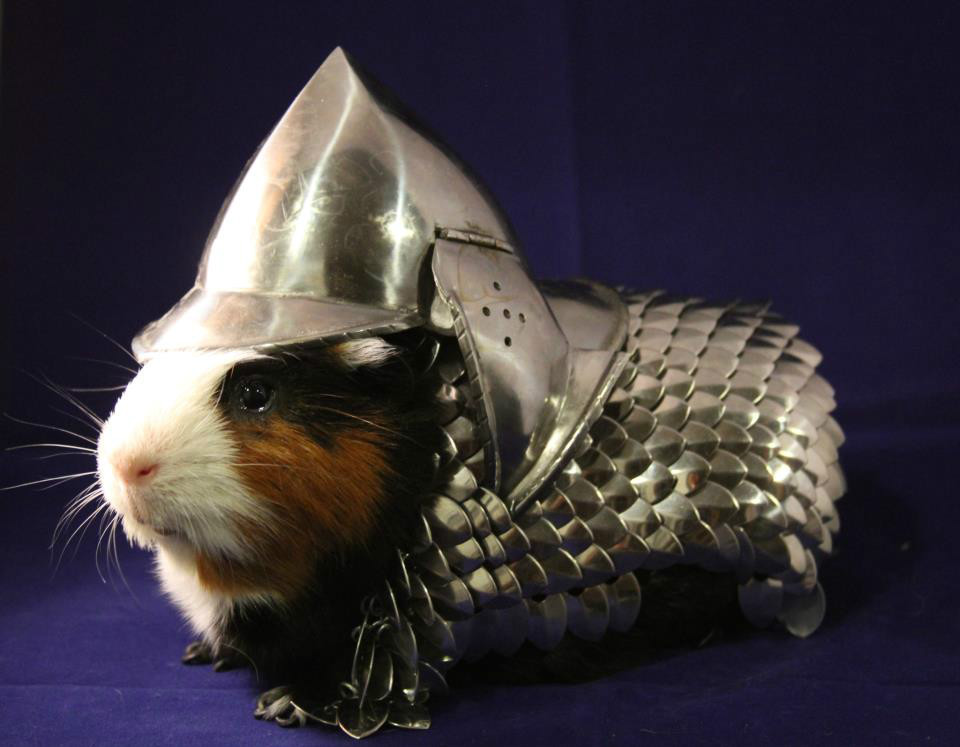
What does every guinea pig need? A suit of armor, of course. And how much would one cost, we hear you ask? Well, $24,300 seems to be the going rate, if you look at eBay. The elaborate suit for a cute creature was put up for auction in 2013 to raise money for the Metropolitan guinea pig rescue. The nonprofit Virginia organization rescues, rehabilitates and re-homes unwanted guinea pigs. There were 47 bidders involved. Sadly the winning bidder backed out, so the suit got relisted.

9. Window

Via dallasobserver
How can a window fetch a winning bid of over $3 million on eBay? When it's said to be the window where Lee Harvey Oswald shot John F. Kennedy. The window and frame from Oswald's "sniper's perch" at the Texas School Book Depository were sold by the local family that owned the depository. The winner offered a massive $3,001,501 in 2007 to own the apparent piece of history. But two years later, the authenticity was contested. A Kennedy memorabilia collector claimed to own the "real" snipers perch. The dispute went to a Dallas Courtroom after both tried to sell their windows. And that a $3 million bidder? Turned out the money wasn't really there.

10. Justin Bieber's hair 

Via youtube
Of course, it's not surprising that body parts become even more valuable when they belong to someone famous. And when that person is Justin Bieber. The body part is his much talked about hair for the crazy value of $40,668! When the singer took a lock of his newly chopped hair to his interview with Ellen Degeneres in 2011, the TV talk show host immediately put it on eBay. Animal rescue organization, The Gentle Barn Foundation, was the lucky recipient of the tens of thousands of dollars.

What do you think is the weirdest thing ever sold on eBay? Let us know in the comments below and don't forget to subscribe to our newsletter. See you!
Read more